Devlog post

The original plan was extremely reasonable:
- Make a spelling-bee-style game.
- Do not put an ad between every two thoughts.
- Let people play more than one puzzle a day.
- Ship it.
Look at that fourth item. Adorable.
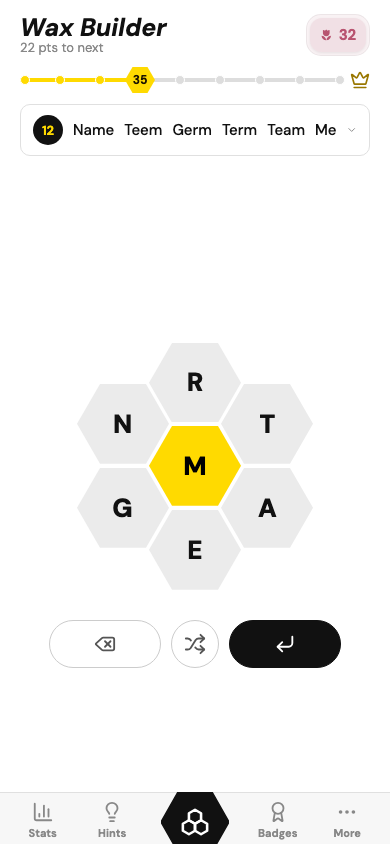
The first version had one hard-coded puzzle and a honeycomb made from overlapping rounded rectangles. You could tap letters, submit a word, get points, and feel briefly powerful. The game part arrived quickly.
Then I needed a second puzzle.
A dictionary is just a bug database with alphabetical sorting
Downloading a word list is easy. Deciding which words belong in a game is where the floor opens beneath you.
Is this word common enough? Is it technically valid but deeply annoying? Is that plural fair? Why does this medical term exist in the easy list? Who invited fourteen kinds of obsolete farm equipment?
English became a pipeline using SCOWL, frequency data, and allow/block lists. Spanish needed accent-friendly input plus a proper review ledger. Portuguese got its own validation and definition work because translated-English leftovers are not a language feature.
At some point I was no longer “adding Portuguese.” I was reviewing conjugation leaks and gender-pair symmetry on a Friday night. The clown nose stays on during serious work.
The nice parts grew too
The game now remembers unfinished puzzles, avoids repeats across a very large pool, stores definitions offline, tracks ranks and badges, and lets players earn nectar for hints.
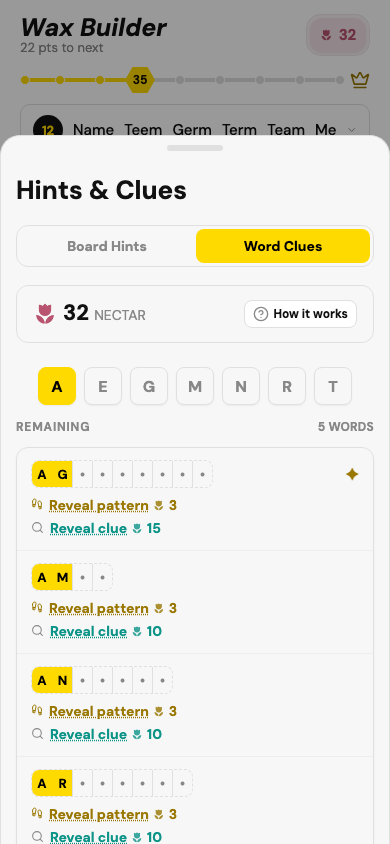
The rules I care about survived the scope explosion: no ads, no subscription, no daily lockout, and no account required to spell words on your own phone. Wild product strategy, I know.
Spell the Hive is out on the App Store for iPhone and iPad, playable in any browser, and still in beta on Android. It still needs more animation, sound, onboarding polish, and the endless dictionary gardening that apparently comes with the property.
But it is real. People can play it. Occasionally they even find words I spent weeks trying to remove.